
WRA: Angus
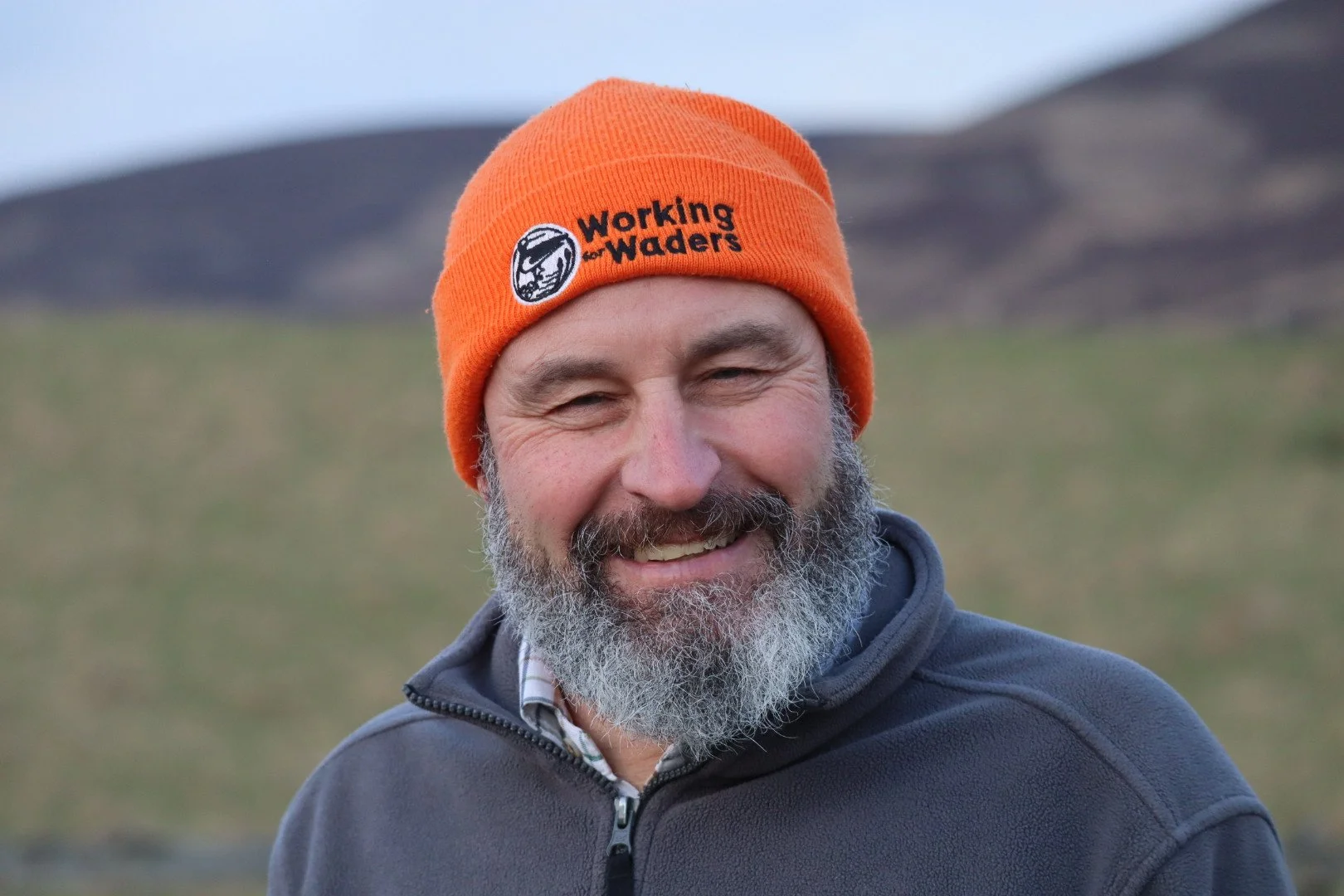
Angus Glens consultant and wader facilitator Bruce Cooper
Angus has always been an excellent place for breeding waders, particularly in the famous glens where moorland management for red grouse has created ideal conditions for breeding birds. Below the heather hills, marginal grazing and farmland runs down into productive arable country, and the mix appears to suit a full range of waders, from golden plover on the tops to lapwings in fields around towns like Kirriemuir and Edzell. Consistently identified as a wader hot-spot, there is some evidence that wader numbers are now declining, particularly where large areas of formerly productive wader habitat are being lost or fragmented by woodland creation and more intensive farming operations.
In previous years, attention has been focussed on a few individual farms and estates which seemed to be leading the charge on wader conservation, but work is now being directed towards better collaboration at a landscape scale. This has led to the creation of a West Angus Wader Community, facilitated by local conservationist and bird ringer Bruce Cooper. Since 2023, the West Angus Cluster has encouraged farmers and gamekeepers to build a shared store of evidence on wader distribution and productivity, particularly to document and build evidence around recent declines.
The heart of the West Angus Wader Cluster lies around Kirriemuir, but there are clear potential linkages to a string of larger moorland estates which run all the way into the south of the Cairngorms National Park. The sky’s the limit, but there are also many threats to waders in Angus, particularly since many birds depend upon moorland management for grouse which often feels very vulnerable to legislative and political change. There has also been an expansion of forest cover in this area over the past few years, particularly in areas where wader numbers have been strong in the past. It’s crucial that we monitor the impact of these changes so that we can make better decisions for the future. We often have anecdotal evidence that where trees replace gamekeepers, waders suffer - but it’s not always easy to prove this point and establish areas where waders need to be considered as a priority.
Angus is a clearly a key area for wading birds in Scotland. Action on the ground is strong and progressing well, but there potential challenges are always waiting around the corner. Monitoring and vigilance will be an important part of the way forward if Angus goes on to become a Wader Recovery Area!