
Hebridean Waders!
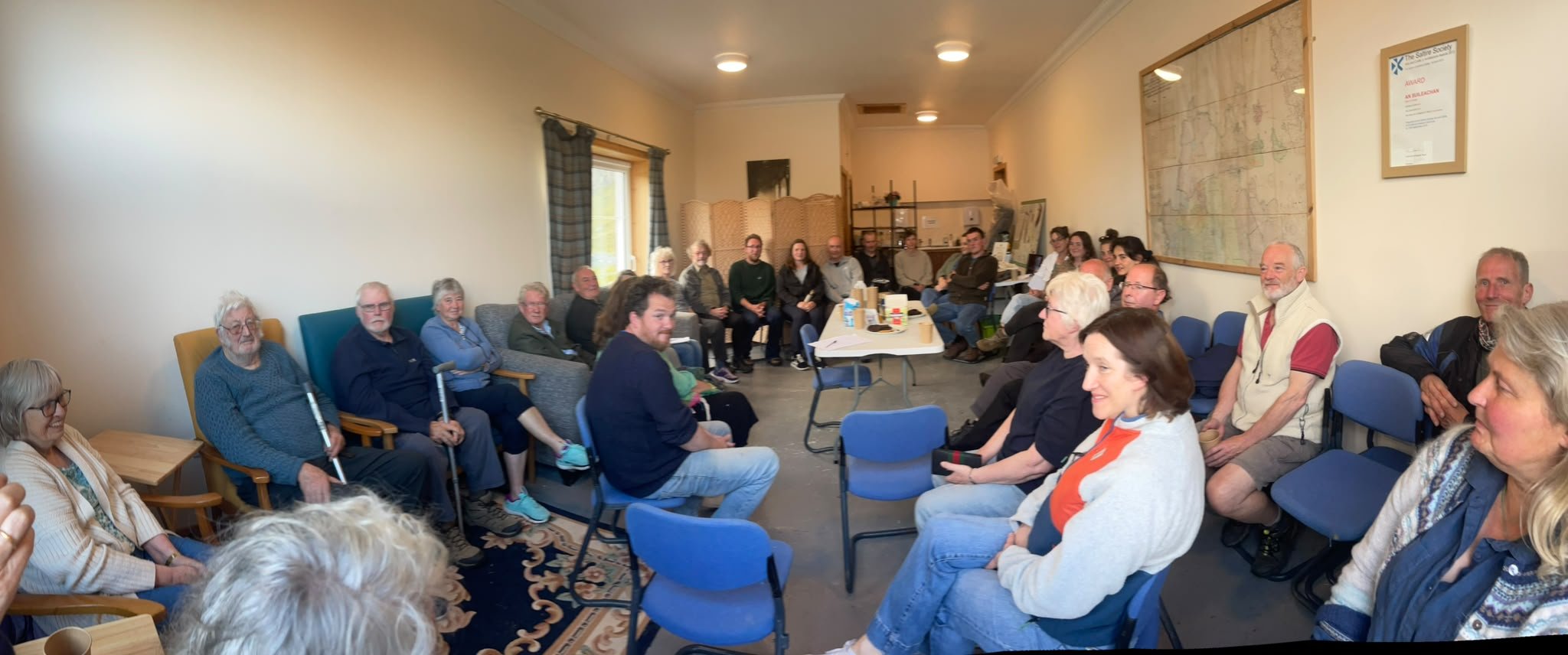
More than thirty people turned out to talk about wading birds and wader conservation at the Bhaltos Community Hall in West Lewis on Thursday night (30th July). It’s not easy to find exact facts and figures on the current status of lapwings, curlews and oystercatchers on Lewis, but there is some evidence to suggest that the birds are not so common as they used to be in parts of the Western Isles. Declines here may not be so dramatic as they are in other parts of the country, but it’s clear that downward trajectories can soon pick up speed – and it’s easier to address problems early than allow them to worsen.
In recent months, NatureSCOT and Working for Waders has focussed on a regional approach to wader conservation, and plans are afoot to prioritise funding, energy and resources to fourteen specific “wader recovery areas”, from Lanarkshire to Shetland. Lewis and Harris have been highlighted as a potential recovery area, so conversation at the event turned to thinking about where the challenges and opportunities lie in the Islands. This in turn led to a discussion about land management, incentives for traditional crofting methods and a push to improve responsible access during the breeding season. There were also useful discussions around the subject of predation, particularly relating to species like ravens, hedgehogs and rats.
Speaking about the event afterwards, Working for Waders’ Patrick Laurie said “in many ways, it’s easy to be a wader conservationist in Scotland. Curlews and lapwings are such beautiful and evocative birds – no matter where you go in the country, you’ll always find people who want to help them out. The hard part is working out precisely what each community needs to deliver change, because the problems facing waders are different everywhere you go. In some parts of Scotland, birds are threatened by predators like ravens, foxes and badgers. In other places, it’s all about intensive grassland management for silage or a push to grow commercial forestry. We covered some useful ground at this event because it felt like local people were focussing in on local issues – and we know from experience that good conservation always starts in the community first. I’m excited to see what happens next for waders in West Lewis”.
The event was generously hosted by the Bhaltos Community Trust and funded by NatureSCOT on behalf of Working for Waders.